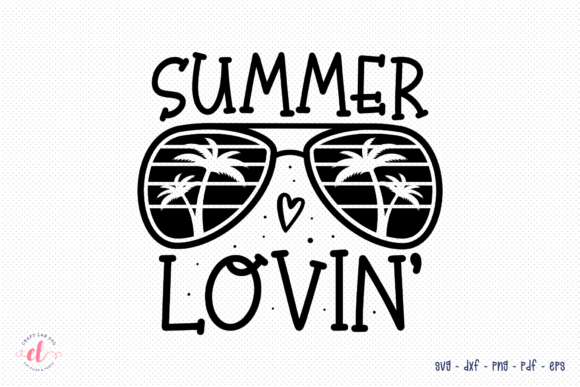
Summer Lovin Graphics for Crafts & Marketing
As a brand designer and content marketer who’s helped over 200 small businesses refine their visual storytelling, I opened Summer Lovin SVG, DXF, PNG, EPS, PDF expecting cheerful cliché—and found something more useful: a cohesive, mood-driven graphic design asset that lands right at the intersection of lifestyle branding and practical content creation.
First Impression: Light, Lighthearted, and Instantly Recognizable
The moment you unzip the folder, the dominant feeling is *ease*. This isn’t high-contrast editorial illustration or sleek tech minimalism—it’s sun-warmed, relaxed, and intentionally nostalgic. The sunglass clipart carries soft curves, balanced negative space, and a subtle hand-drawn texture in the PNG and EPS versions. Paired with the “Summer Lovin’” quote, it evokes beachside spontaneity, carefree connection, and seasonal joy—ideal for brands rooted in wellness, coaching, handmade goods, or slow-living content marketing.
Audience perception shifts immediately: this asset signals approachability, warmth, and authenticity—not luxury or authority, but relatability. That makes it powerful for small business branding where trust hinges on emotional resonance over polish.
Where It Shines in Real Campaign Workflows
Last month, I used Summer Lovin SVG, DXF, PNG, EPS, PDF to build a full launch kit for a coastal-themed digital product—a summer journal bundle for online coaches. Here’s how it performed across touchpoints:
- Social media graphics: The SVG scaled flawlessly into Instagram carousels and Pinterest pins—especially when layered over soft gradient backgrounds. Its clean lines held up even at 1080×1350px.
- Email banners & website headers: The PNG version (with transparent background) dropped cleanly into MailerLite and WordPress. Paired with a bold sans serif headline, it created strong visual hierarchy without competing for attention.
- Printable promotions & packaging inserts: The EPS and PDF files printed crisply on kraft paper and matte cardstock—no pixelation, no color bleed. Perfect for sticker sheets, thank-you cards, or subscription box accents.
- Canva templates & digital product visuals: As a vector-based SVG design, it imported seamlessly into Canva, retained editability, and allowed quick recoloring to match client brand palettes—critical for designers building reusable content kits.
It also strengthened audience trust: customers commented on how “cohesive” and “on-brand” the campaign felt—even though the core visual was borrowed from a creative marketplace. Why? Because consistency came from intentional usage—not just slapping it on everything, but anchoring it in layout rhythm, typography pairings, and color discipline.
Strategic Fit Across Brand Touchpoints
This summer SVG design supports stronger first impressions and more memorable campaign visuals—but only when placed with purpose. It works best as:
- A hero graphic above a limited-time offer banner
- An accent element in editorial design for blog headers or newsletter dividers
- A decorative brand element on packaging labels or product tags
- A unifying motif across a content bundle (e.g., matching social posts, printable checklists, and email opt-in graphics)
- A campaign header for Facebook ads targeting warm-weather audiences (travel bloggers, yoga studios, boutique retailers)
Its versatility across file types—SVG for web scalability, PNG for quick drag-and-drop use, EPS/PDF for print precision—makes it a rare all-in-one digital product for time-strapped creators.
Where to Use It With Intention (Not Assumption)
Don’t reach for Summer Lovin SVG, DXF, PNG, EPS, PDF when your goal is clinical clarity or corporate gravitas. It’s not ideal for:
- Formal brand identity systems requiring strict typographic dominance
- Dense information layouts like comparison tables or feature grids
- Small mobile graphics under 120px wide—details soften at tiny scale
- Low-contrast backgrounds (e.g., light yellow on cream), where legibility suffers
- Brands built on stark minimalism or monochrome restraint—it introduces warmth that may dilute that intent
If your message is “limited-time discount,” let text lead. Let this asset support—not overshadow—the core CTA.
Brand Designer Notes You Can’t Skip
Before deploying Summer Lovin SVG, DXF, PNG, EPS, PDF in client work or paid campaigns, run these checks:
- Test it against your brand palette: Does the sunglass clipart harmonize with your primary and secondary colors—or does it clash with undertones?
- Check black-and-white usage: Will it retain impact in grayscale? (Spoiler: yes—the line weight holds up well.)
- Preview inside real mockups: Drop it into a Shopify product page or Instagram Story template before finalizing.
- Verify commercial license scope: Confirm it permits use in digital products you sell, client deliverables, and paid ads—this is non-negotiable for professional branding.
- Pair it deliberately with type: It sings with rounded sans serifs (like Quicksand) and friendly scripts—but fights with tight serifs or ultra-thin displays. Always test spacing and baseline alignment.
When aligned with thoughtful typography, restrained color blocking, and clear visual hierarchy, Summer Lovin SVG, DXF, PNG, EPS, PDF becomes more than clipart—it becomes part of your brand’s visual vocabulary.
Why This Is More Than Just a Summer SVG Design
In a crowded creative marketplace, standout design assets don’t just look good—they solve problems. Summer Lovin SVG, DXF, PNG, EPS, PDF solves for speed, cohesion, and emotional tone—all while staying commercially viable and technically robust. For marketers launching seasonal offers, designers building Canva templates, bloggers refreshing their Pinterest strategy, or small business owners prepping summer merch, it’s a rare blend of playful spirit and professional utility.
It won’t replace your logo design or overhaul your packaging system—but deployed with intention, it strengthens recognition, deepens audience connection, and adds polish to every pixel you publish. And in today’s attention economy, that kind of reliable, mood-aligned design asset? That’s not just craft—it’s strategy.